What to do before waxing, and what to do after
A before-and-after routine for waxing at home: hair length, exfoliating, what to put on afterwards, what to avoid, how long waxing lasts and what to do if spots appear.
Waxing and threading
What to do before waxing: let the hair grow to about half a centimetre, exfoliate gently a day or two before, and arrive with clean, dry skin and nothing on it. What to do after: keep the skin cool, clean and loose for 48 hours. That covers most of it. The rest of this page is the detail, including how long waxing lasts and what to do if spots appear.
This is general information from the trade, not medical advice. If you have a skin condition, are on medication that affects your skin, or are pregnant, read our page on waxing in pregnancy and other safety questions and ask your doctor.
Two days before
Let the hair grow. Wax needs something to grip. About half a centimetre, roughly two to three weeks after your last shave, is the length that lifts cleanly. Shorter than that and the wax misses hairs; much longer and it pulls more than it needs to. If it is very long, trim, do not shave.
Exfoliate once, gently. A soft scrub or a mitt in the shower, a day or two before, lifts dead skin so the wax grips hair rather than skin, and it frees any hairs that are starting to grow in. Do not exfoliate on the day itself, and do not use acids or anything that leaves the skin pink.
Stop the actives. If you use retinoids, exfoliating acids or anything that thins the skin on the area to be waxed, stop a few days before and tell your therapist. Skin that has been treated with them can lift with the wax.
The day itself
- Shower, and let the skin dry fully.
- Nothing on the skin: no oil, lotion, deodorant or perfume on the areas being waxed. Wax will not grip through them.
- Loose clothing to change back into. Cotton, not tight leggings, especially for a bikini line or full legs.
- A pain reliever is a personal choice; if you are thinking about a numbing cream, ask a pharmacist first rather than applying one without advice.
- Tell your therapist about anything on the skin: moles, a recent scar, sunburn, a rash, a patch of eczema. She will work around it or, if the skin is not ready, wax another day.
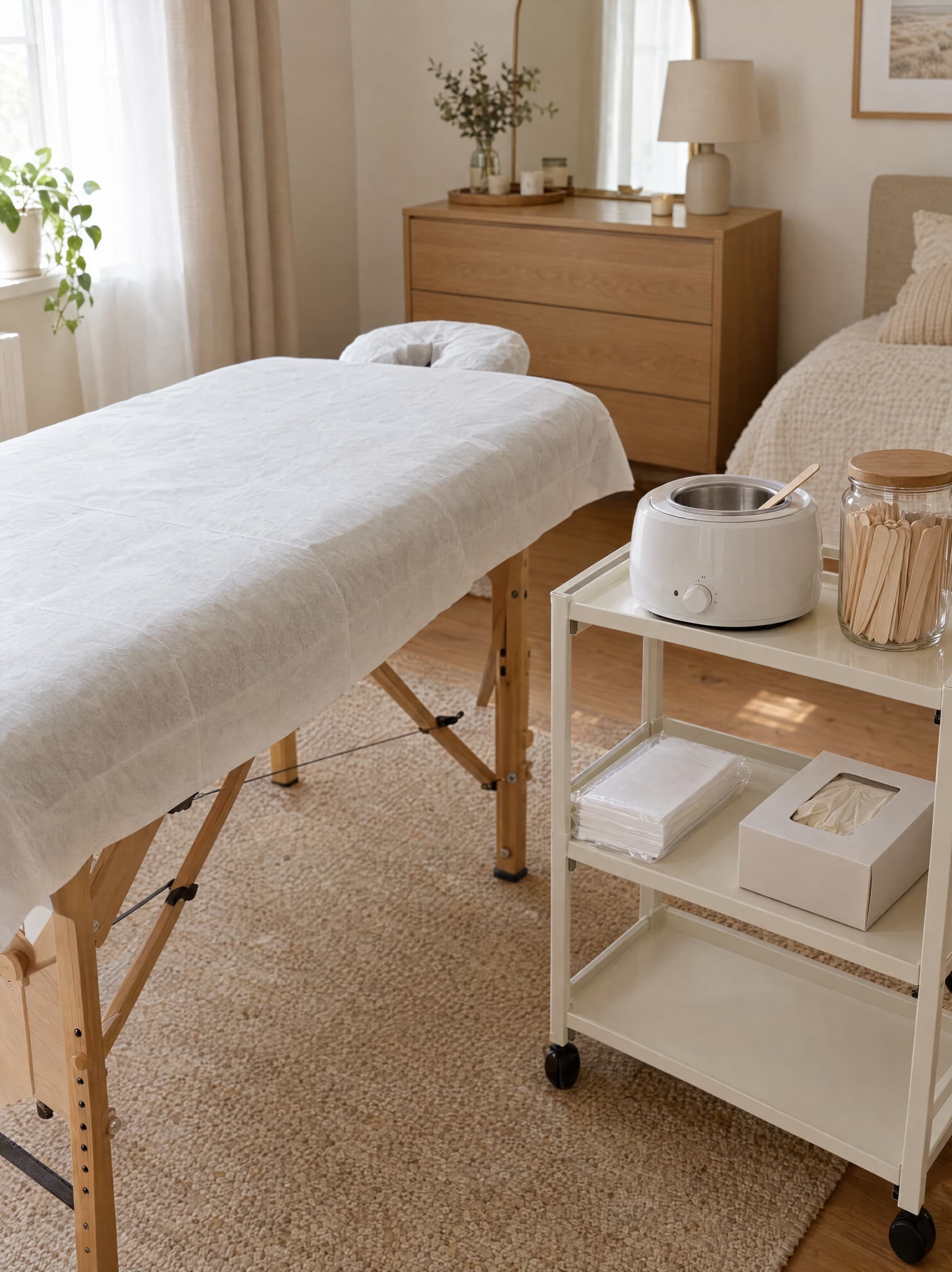
When we arrive, your therapist sets up a covered treatment surface and heats the wax. Every spatula goes into the wax once and is thrown away; strips are new for you; she wears gloves. You can read the rest on our hygiene page. Our waxing glossary entry explains the difference between warm strip wax and hard wax and where each is used.
The first 48 hours after
Freshly waxed skin has open follicles and is more sensitive than usual. For a day or two:
- Keep it cool. No hot showers, baths, steam, sauna or Moroccan bath. Lukewarm water is fine.
- Keep it clean. Wash with water or a mild unscented wash. No perfume, scented lotion or deodorant on the area until the redness has gone.
- Keep it out of the sun. Cover the area, and do not sunbathe or use tanning products on it.
- Keep it dry of sweat. Skip the gym, swimming pool and sea, and wear loose cotton.
- Keep your hands off. Rubbing, scratching and picking are how bumps become spots.
Most redness settles within a few hours, and by the next morning the skin usually looks normal.
What to put on after waxing
The question people type most often, in both languages. The honest answer: very little. A thin layer of aloe vera gel or a plain, unscented moisturiser after the first few hours is enough. Coconut oil or a light oil is fine once the skin has calmed, but not immediately after, when the follicles are open. Petroleum jelly seals the skin and can trap heat and sweat on a freshly waxed area, so save it for later, if at all. Anything with fragrance, alcohol or acids waits until the redness has gone.
From day three onwards
Start gentle exfoliation again two or three times a week, and moisturise daily. This is the routine that prevents ingrown hairs and the "strawberry legs" look, which is simply dark follicles showing through dry skin. The NHS notes that waxing, plucking and threading can all lead to ingrown hairs, and that a gentle exfoliating scrub helps release trapped hairs; it also says not to scratch, pick or squeeze them, because that damages the skin.
Do not shave between waxes. Shaving thickens the regrowth's blunt ends and resets the cycle, so the next wax is less comfortable and less even.
Spots after waxing
Small red or white-headed bumps in the first day or two are common. They are irritated follicles, sometimes with a little trapped sweat, and they usually settle on their own. Keep the area clean and cool, wear loose clothes, and do not pick or squeeze.
If a bump becomes very painful, hot or swollen, or you feel feverish, that is beyond normal irritation: see a doctor. If bumps appear after every wax, tell your therapist; a different wax, or threading for the face, may suit your skin better.
How long does waxing last?
Usually three to five weeks before an area needs waxing again. Legs tend to hold longest, underarms and the upper lip shortest, and your own growth cycle matters more than the method. Regrowth after waxing is finer and sparser than after shaving, and with regular waxing many women find the gaps stretch. Our comparison of waxing, sugaring, shaving and threading sets out how long each one lasts.
What you can book
Hamd Beauty offers full arms, full legs and full body waxing at home in Dubai, with warm wax, a new spatula for every dip and a new strip for every client, by a woman therapist. The Smooth & Polished package pairs a full body wax with a gel manicure. Book a full legs wax, or choose the area you need.
Quick answers
Sources
General information, not medical advice. If you have a health condition or are pregnant, ask your doctor first.