Is a gel manicure safe for your nails?
What actually damages nails under gel (rough removal, peeling), what does not, the allergy and UV lamp questions answered plainly, and when to ask a doctor.
Nails
For most women a gel manicure is safe when it is done properly: applied to a prepared nail without touching the skin, cured fully, and removed by soaking rather than peeling. The thinning and peeling people blame on gel almost always comes from how it was taken off, not from the polish. This article is general information, not medical advice; if you are pregnant, have a skin or nail condition, or react to cosmetics, ask your doctor before you book.
Is gel manicure bad for your nails?
Not in itself. Gel polish is a coating that cures hard on top of the nail plate. It does not soak into the nail or change how it grows. Nails that come out of a gel set thin, white-flecked and bendy have usually been through one of three things.
Peeling. A lifted edge is tempting to pull. Each pull takes the top layers of the nail plate with it, which is why the nail underneath looks rough and feels weak. This is the single most common cause of "gel ruined my nails", and it is the one you can stop today.
Rough removal. Filing colour off with a coarse file or scraping too hard after a short soak takes nail as well as polish. The method that protects the nail is a patient acetone soak, and the steps are in how to remove gel polish without damaging the nail.
No break between sets. The nail under a coating cannot be oiled. Months of back-to-back gel with no rest tends to leave the plate dry and brittle. A week or two with cuticle oil and a plain classic manicure between sets puts that right.
Is gel manicure good for your nails?
It can be, for one specific reason: the cured coat adds strength. A nail that catches, splits at the corner or breaks below the free edge is protected by gel for the two to three weeks it stays on, so many women grow nails under gel that they could not grow bare.
It is not a treatment, though. Nothing in a gel polish feeds the nail. Whatever condition your nail was in when the colour went on is the condition it will be in when the colour comes off, minus anything lost in removal.
The allergy question
The ingredients that make gel cure are acrylates and methacrylates. When cured properly on the nail they are inert. Uncured product on the skin is the concern: the U.S. Food and Drug Administration notes that traces of reactive monomers can cause redness, swelling and pain around the nail in people who have become sensitised to methacrylates, and that the ingredient is considered safe as used when skin contact is avoided.
In practice that means three things.
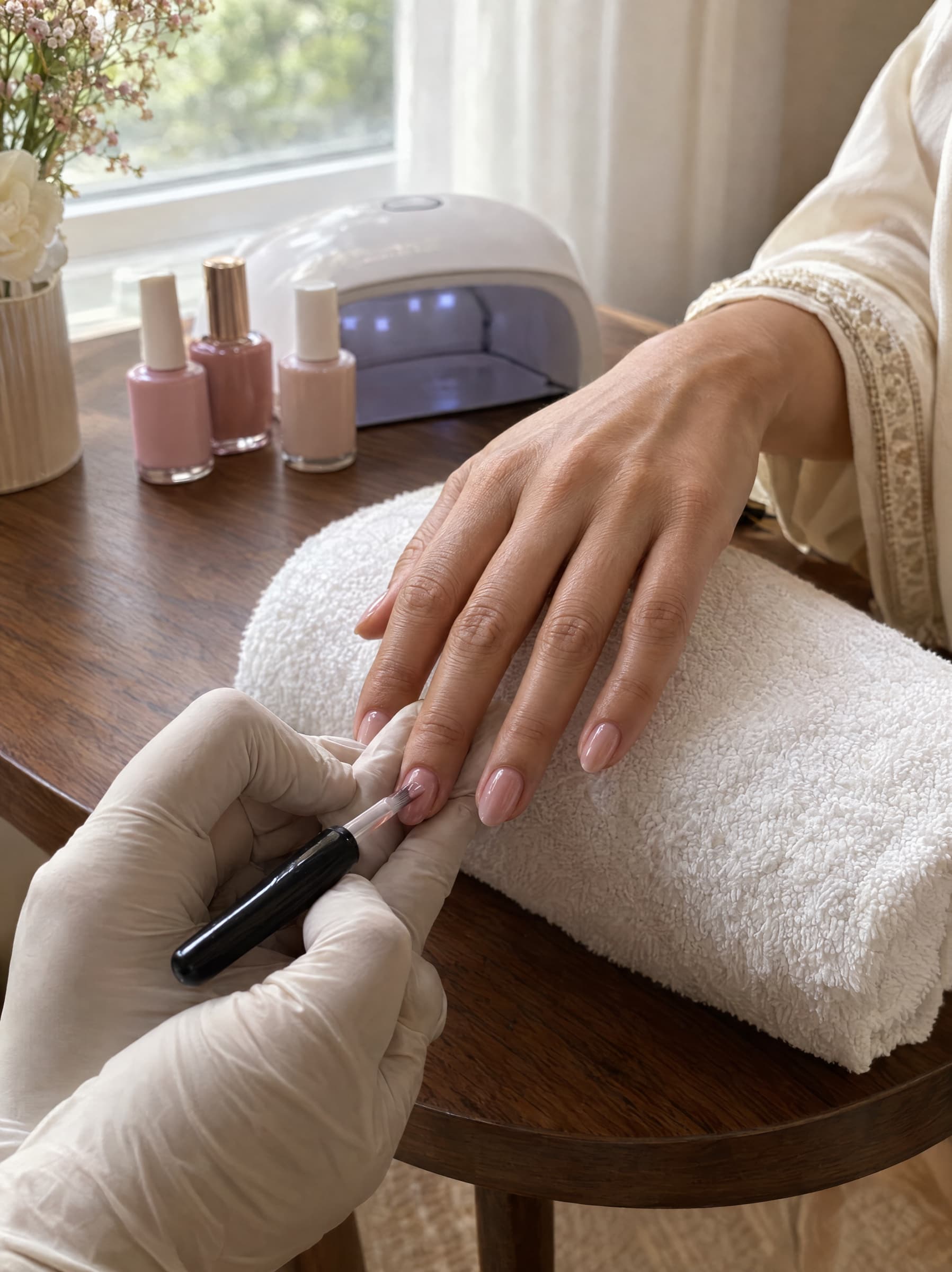
- Polish should never touch the skin or the cuticle. A careful therapist leaves a hair's width of bare nail at the edge, and wipes any flood before curing.
- Every layer must be cured for the full time under the lamp. A tacky, under-cured layer is uncured product sitting against your skin for weeks.
- If you notice itching, redness or swelling around the nails, or a rash where your hands touch your face, stop gel and see a doctor. A reaction can start after years of trouble-free manicures.
A patch test is not routine for gel polish the way it is for lash tint, but if you have reacted to any nail product before, tell your therapist when you book.
The lamp question
Gel cures under a lamp that gives off UV light. Whether that exposure matters over years of manicures is a question people ask a lot, and we would rather not give you a confident answer we cannot back with a source we have read. If it concerns you, or you take medication that makes your skin sensitive to light, ask your doctor or a dermatologist. Two low-cost precautions cost you nothing: apply a broad-spectrum sunscreen to the backs of your hands before the visit, or wear fingerless gloves during curing. Either way, keep the curing time to what the polish needs and no longer.
Is a gel manicure safe during pregnancy?
This is one for your doctor or midwife, and we will not pretend otherwise. What we can say is what makes any manicure more comfortable: a room with a window open, no polish on the skin, and telling your therapist so she can keep the session short and seat you well. If your doctor prefers you avoid gel for now, a classic manicure with regular polish is on the same menu.
Is a gel manicure the same as shellac?
Near enough. Shellac is a word many people use for gel polish in general. Both are thin, soak-off colour cured under a lamp, worn for two to three weeks and removed with acetone. The advice in this article applies to either.
What gel polish is not is builder gel, acrylic or dip powder, which are thicker systems for strengthening or extending the nail. Those need different removal and are not on the Hamd Beauty menu; the differences are in gel, acrylic, builder gel, BIAB and dip compared.
What safe practice looks like at home
Because the therapist comes to you, you see everything: the tools, the polish, and how each layer goes on.
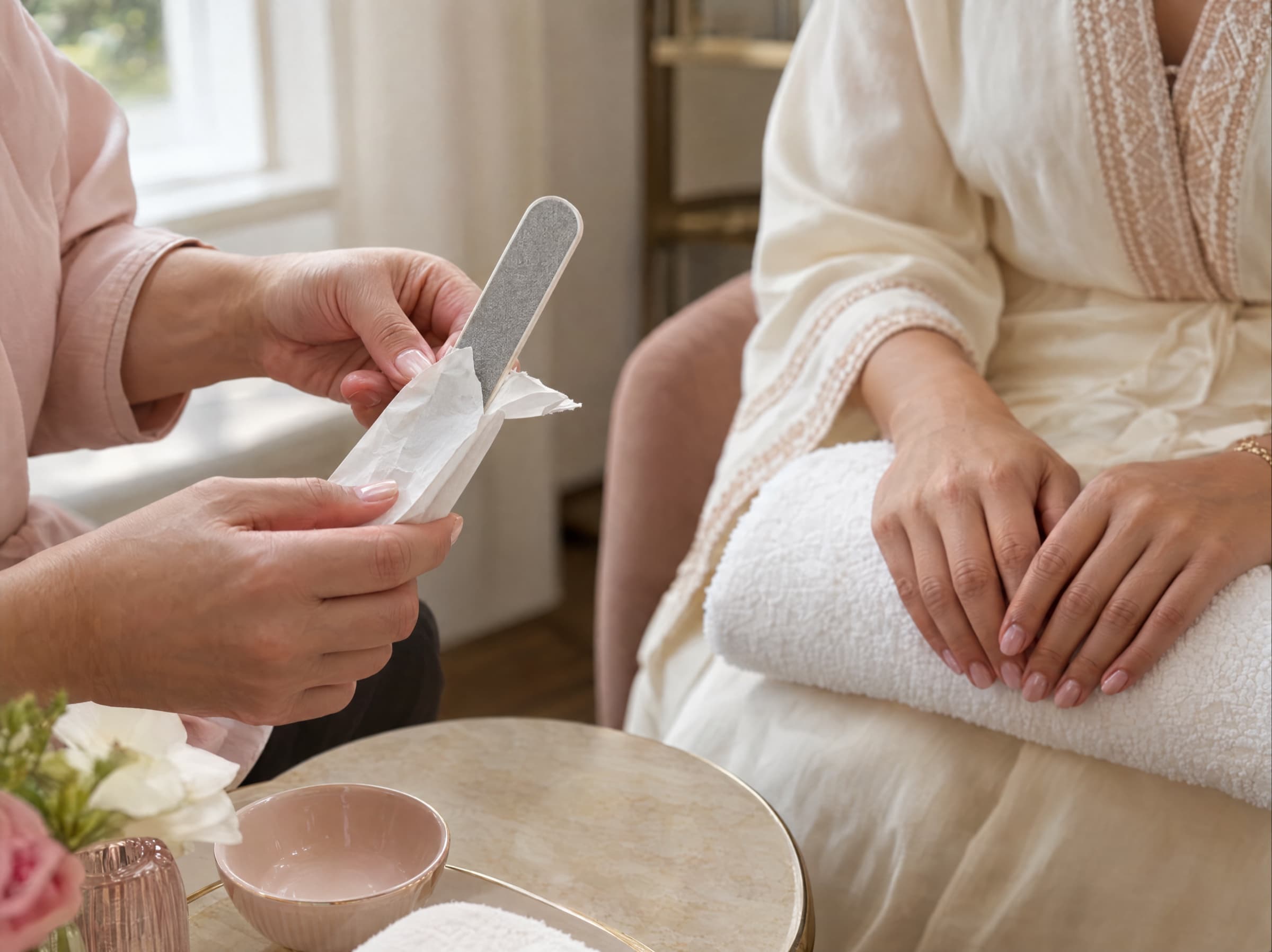
- A new file and buffer for you, and metal tools that arrive in a sealed pouch. Our hygiene standard explains the kit.
- Light preparation. The nail surface is cleaned and lightly buffed, not thinned.
- Colour stopped short of the skin, and every layer cured for its full time.
- Removal by soaking, never by peeling or grinding, when you book the next visit.
What you can book
The gel manicure and gel pedicure are on the nails menu, done at your own table. If you would rather rest your nails, a classic manicure or pedicure with regular polish is there too. Tell us at booking if you are pregnant or have reacted to a nail product before, and we will plan the visit around it.
Quick answers
Sources
General information, not medical advice. If you have a health condition or are pregnant, ask your doctor first.