What is a Russian manicure, and how is it different?
The dry e-file technique explained plainly: what it does to the cuticle, why the edge looks so clean, the risks, whether it hurts, and what we do instead.
Nails
A Russian manicure is a dry manicure done with an electric file: instead of soaking the hands and pushing the cuticle back, the technician uses fine rotating bits to lift and remove the cuticle and the thin layer of skin on the nail plate, so polish can be applied right to the edge of the nail fold. It is why the finish looks so neat in photographs, and why it is searched for so much in Dubai. Hamd Beauty does not currently offer it, but you should know what you are choosing if you go for one elsewhere.
What a Russian manicure actually involves
The name refers to a technique, not a product. Three things set it apart from a classic manicure.
No water. The hands are not soaked. Skin that has been softened in water swells and is harder to work cleanly, so the whole manicure is done dry.
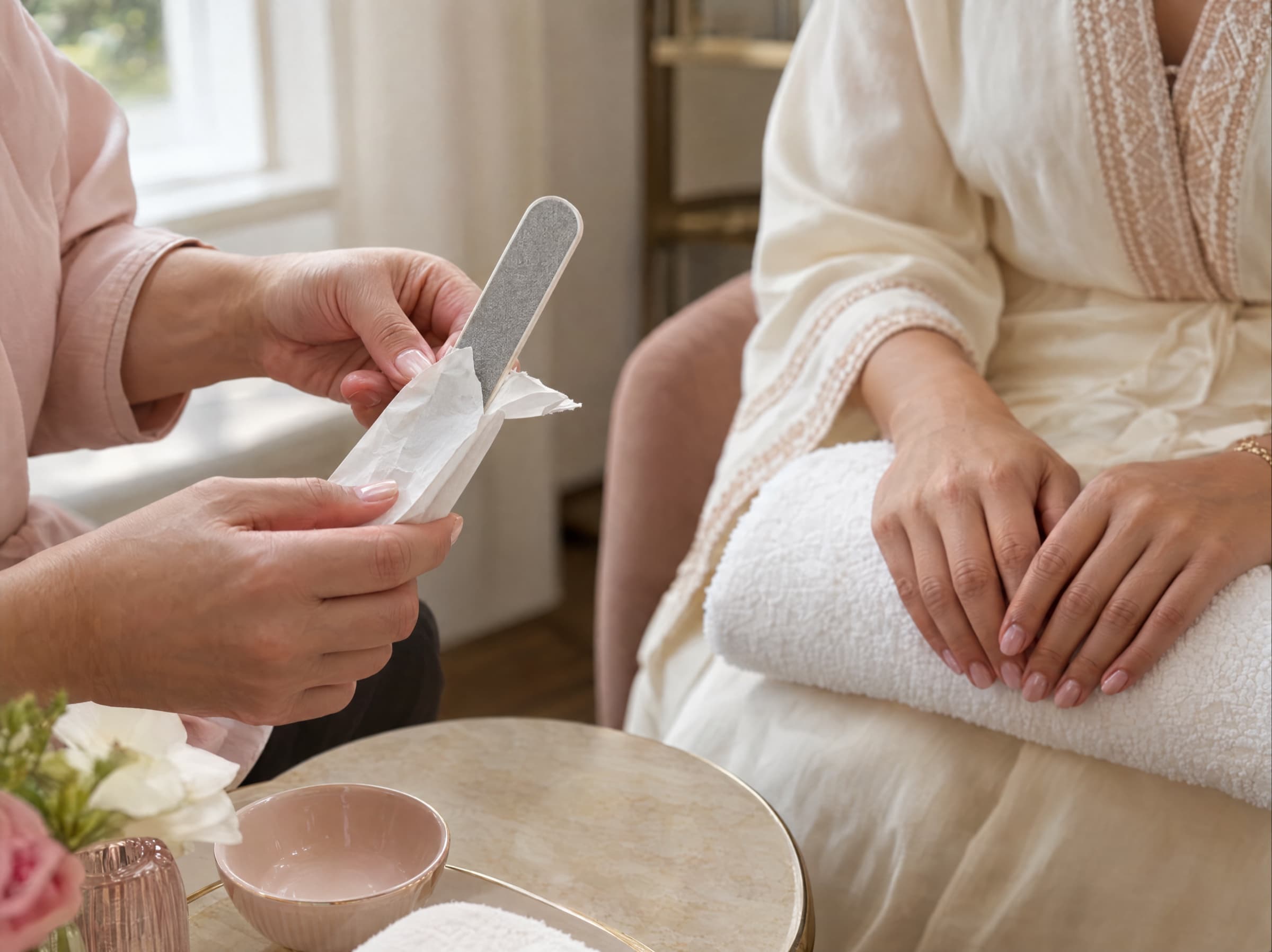
An electric file. A pen-shaped machine with interchangeable bits does the work: a flame- or ball-shaped bit lifts and trims the cuticle, a fine bit clears the thin, almost invisible skin (the pterygium) from the nail plate, and a soft bit buffs the surface. Nippers are used little or not at all.
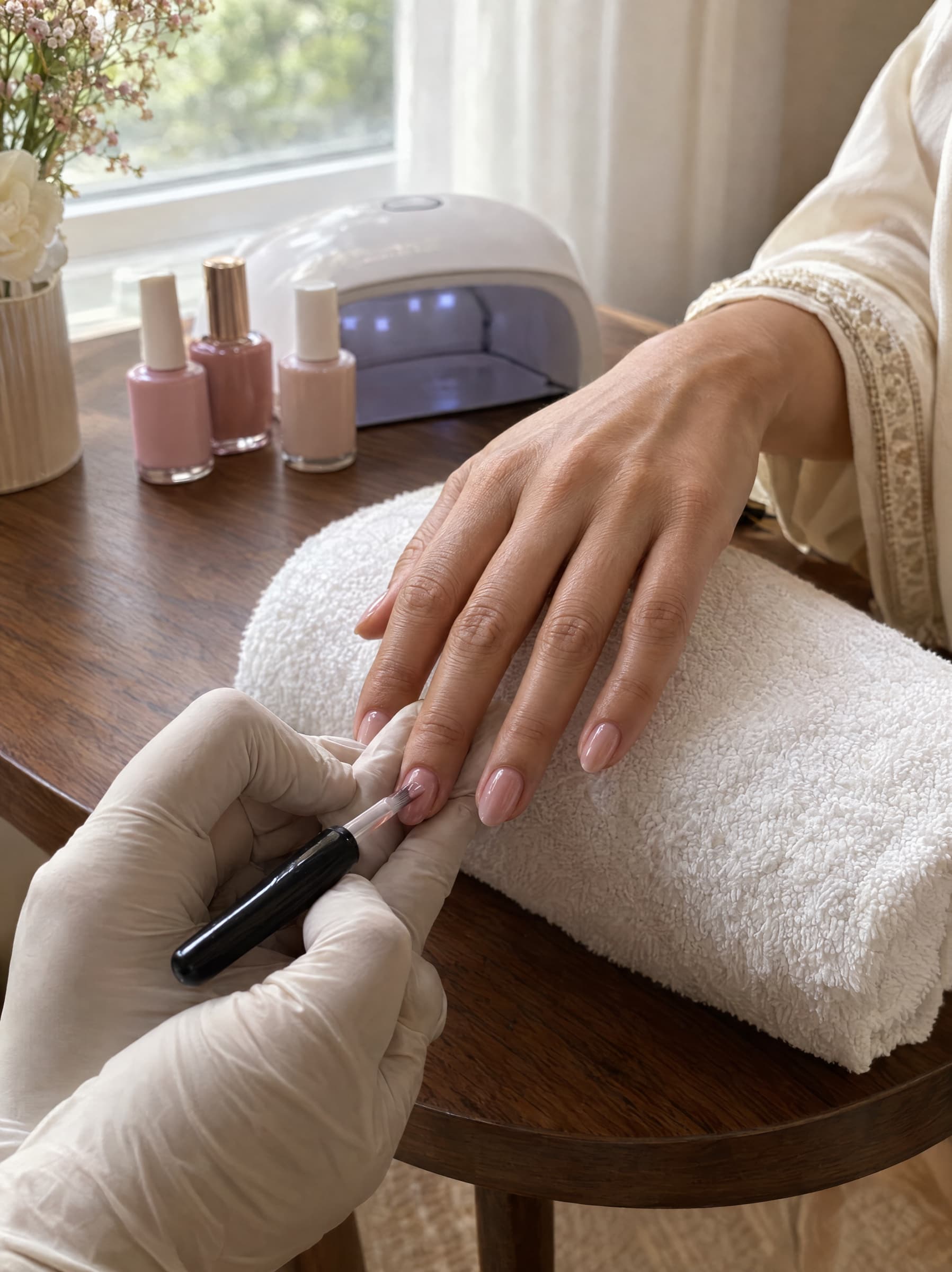
Colour to the edge. With the fold cleared, gel polish is applied very close to the skin, sometimes tucked slightly under the fold. Because there is no gap at the base, the manicure looks fresh for longer as the nail grows.
A full Russian manicure takes noticeably longer than a classic one, often well over an hour for hands alone.
What is a Russian manicure vs a regular manicure?
The difference is what happens to the cuticle. In a classic manicure, the cuticle is softened, pushed back with a stick, and only loose, dead skin is trimmed; the living seal at the base of the nail is left in place. In a Russian manicure, the cuticle is removed entirely, and the skin around the nail is smoothed with the machine.
That is the whole appeal and the whole risk in one sentence. Removing the cuticle gives the cleanest possible edge. It also removes the skin that closes the gap between the nail plate and the fold behind it.
What is a Russian manicure vs a gel manicure?
They are not competing options; they describe different parts of the job. "Russian" is the preparation. "Gel" is the colour. Most Russian manicures end in gel polish, and a gel manicure can be done with either a classic or a Russian preparation. If a salon lists "Russian gel manicure", it means e-file cuticle work followed by gel colour.
Is a Russian manicure safe?
This is general information, not medical advice. The honest answer is that it depends almost entirely on the person holding the machine.
Done well, with a light hand, a slow speed and bits that have been sterilised between clients, it is a precise, clean technique that many women have every three weeks without a problem. Done badly, the same machine can nick the skin, take the nail plate too thin, or leave heat marks. Because the cuticle is removed rather than pushed back, the small openings that are left at the fold are one reason people ask whether the technique is safe; if you have a cut, redness, swelling or pain around a nail after any manicure, see a doctor rather than waiting.
Three questions to ask before you sit down anywhere:
- Are the metal bits sterilised in an autoclave and opened in front of me, or wiped with spray? The bits touch skin, so sterile is the standard, and our hygiene page explains the difference.
- How long has the technician been doing e-file work? It is a skill learned over months.
- Will she stop if I ask? Any warmth or sting should be enough to make her lift the machine.
Is a Russian manicure painful?
It should not be. A slight buzzing or warmth is normal. Sharp pain, a burning feeling or any bleeding means the bit is too deep or too fast, and you should say so straight away. Some soreness for a day afterwards, especially the first time, is common because skin that used to be there has gone.
Is a Russian manicure bad for nails?
Not for the nail plate, as long as the technician does not thin it: the bits used on the plate itself are soft. The question is really about the skin. If you have thin or sensitive skin around the nails, eczema, or a history of infections at the nail fold, a classic preparation is the gentler choice, and a doctor's advice is worth more than ours.
Is a Russian manicure worth it?
If a perfectly clean edge in photographs matters to you, and you have found a technician you trust with sterile tools, many women think so, and they accept the longer appointment. If what you want is tidy, healthy nails with colour that lasts its two to three weeks, a well-done classic preparation gives you most of the result with none of the machine.
What Hamd Beauty does instead
We do not offer the Russian manicure at present. Our classic manicure and gel manicure prepare the cuticle by softening and pushing it back, with a new file, buffer and orange stick for every client, and colour applied close to the fold without touching the skin. The whole nails menu is done at your own table at home. If clean cuticles are what you are after, say so at booking and the therapist will spend more of the visit on them.