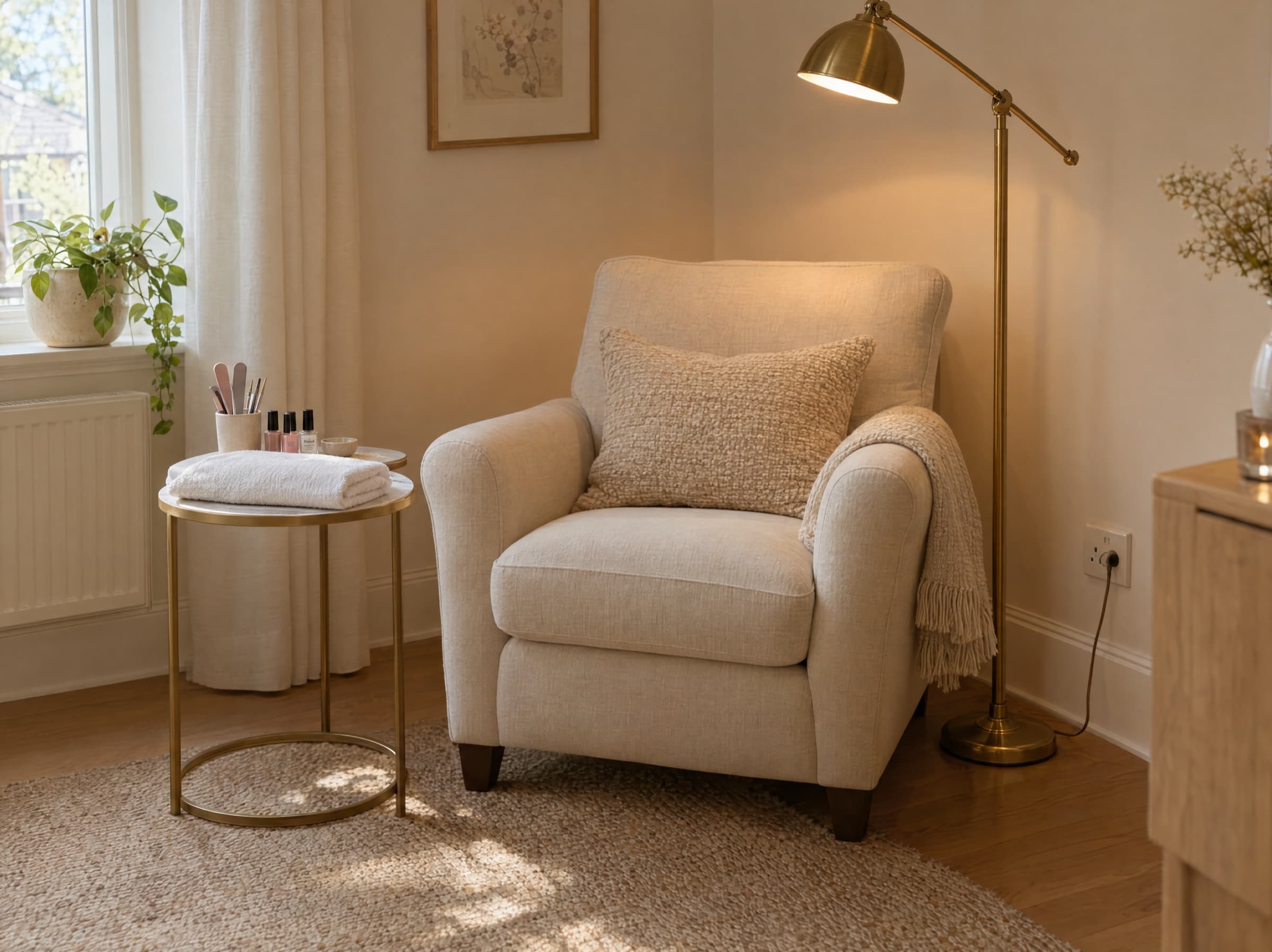
How to prepare your home for a manicure and pedicure
Ten minutes of preparation makes a home manicure and pedicure quicker, cleaner and more comfortable. Here is what to set up before your therapist arrives.
Nails
A manicure and pedicure at home needs very little from you. Your therapist brings her tools, her products, her towels and a lined pedicure tub. What she cannot bring is the room. A few minutes of preparation before she arrives means more of your booking is spent on your hands and feet, and less on moving furniture.
Choose the spot
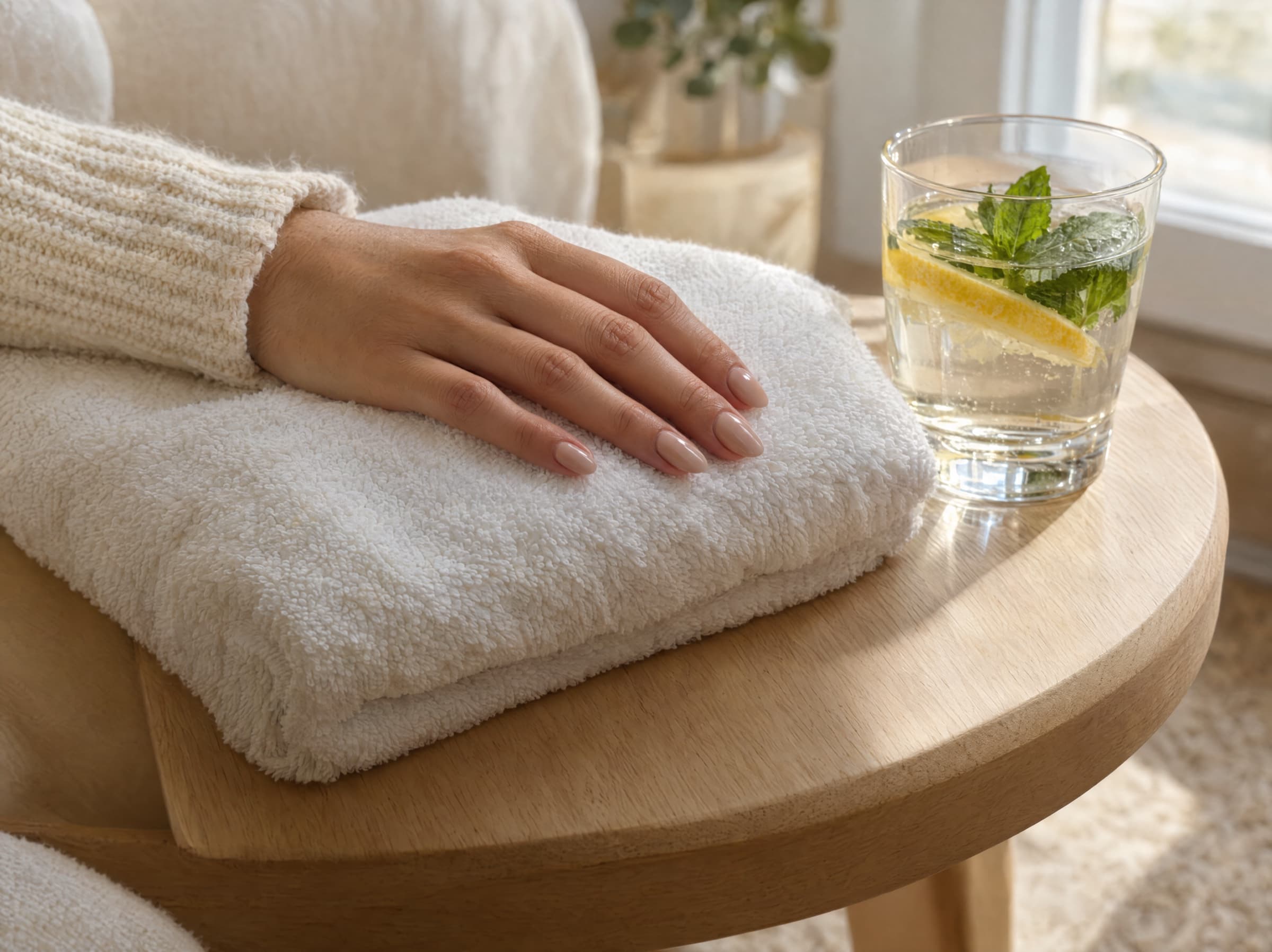
Pick a place where you can sit comfortably for up to two hours. An armchair or a sofa with firm cushions works better than a bar stool or a bed. For the pedicure, your therapist sits lower than you and works at your feet, so leave about a metre of clear floor in front of your seat.
A hard floor is ideal. If the room is carpeted, that is fine: she will lay a protective mat under the tub.
Light matters more than you think
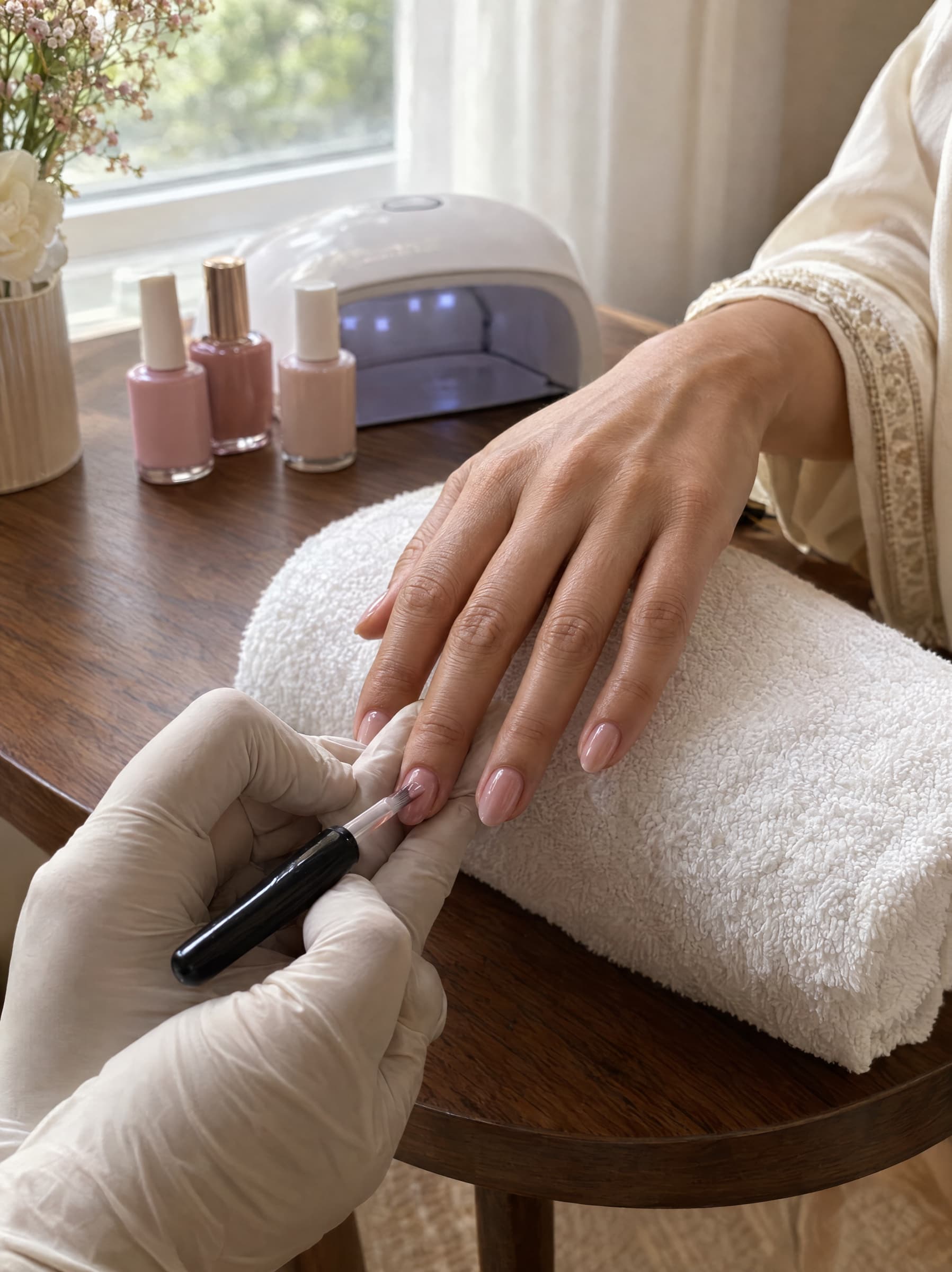
Polish is judged by eye. Sit near a window in the daytime, or have a lamp that can be moved close. Overhead light alone throws shadows across the nails, and that is when small gaps near the cuticle are missed.
A surface and a socket
For the manicure she needs a stable surface about the width of a tray: a side table, a dining table corner or a desk. If you have booked gel, the lamp that cures it needs a power socket within reach, so choose a spot near one or have an extension lead ready.
Water
The pedicure tub is filled with warm water and emptied when the service ends. A bathroom or kitchen sink nearby saves time. Tell her which one you would like her to use.
Before she arrives
- Remove old polish if you can. If it is gel, leave it and say so when you book, so the therapist can plan the time to take it off; peeling it off damages the nail.
- Wear something with sleeves that push up past the elbow, and trousers or a skirt that sits comfortably above the knee.
- Do not shave your legs on the same day. Freshly shaved skin can sting in a foot soak.
- Decide on your colour, or at least the family of colour. Bring out a polish of your own if you have one you love.
- Have open sandals or slippers ready for afterwards.
Children, pets and phones
Small hands and curious paws are drawn to open polish bottles. If you can, settle children with something to do and keep pets in another room for the length of the visit. Make your calls before she starts: a phone is hard to hold with wet nails.
Tell her what she needs to know
If you have diabetes, a skin condition, an ingrown nail, a cut or a recent injury to a hand or foot, tell your therapist before she begins. It changes how she works, and sometimes it means a part of the service should wait. The same goes for any allergy to a product.
What you will see her do
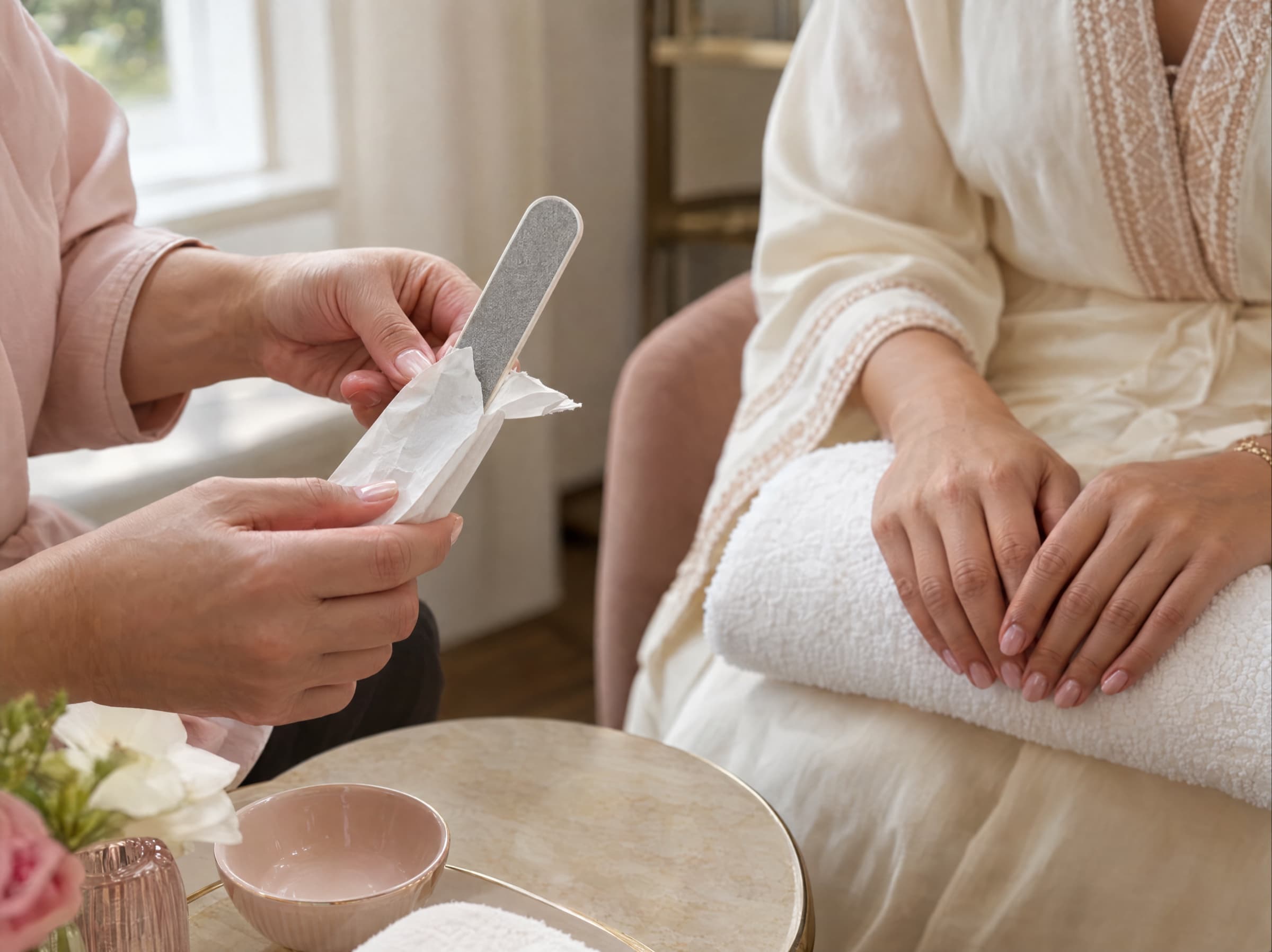
Her metal tools arrive in a sealed sterilisation pouch. Files, buffers and orange sticks are single-use: she opens them in front of you and they are discarded when your visit ends. If you would like to know more about how that works, read the Hygiene Promise.
Afterwards
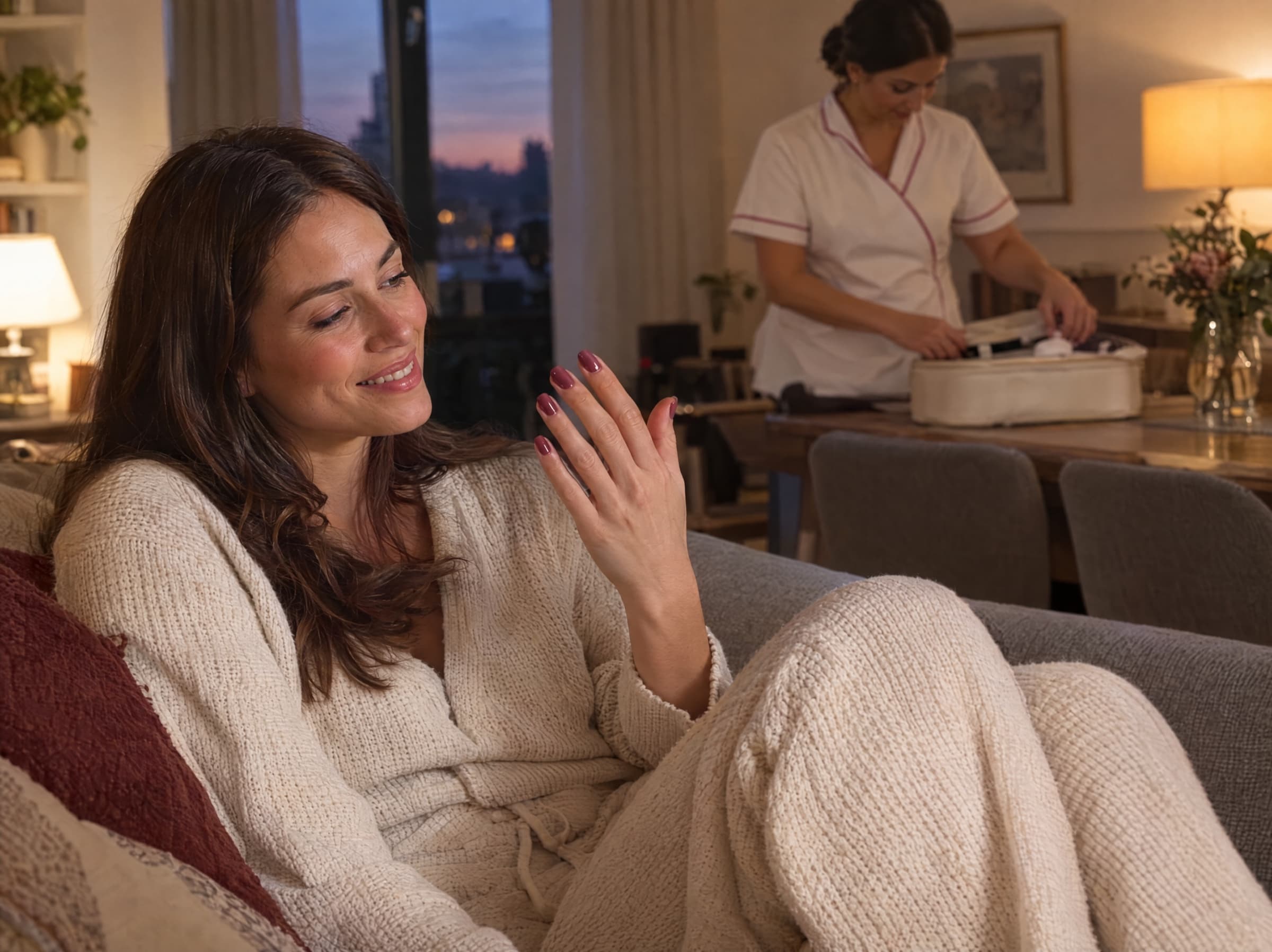
Regular polish is touch dry in about twenty minutes and takes a few hours to harden fully, so plan a quiet hour. Avoid a hot bath or washing up straight away. A little cuticle oil each night keeps the result looking fresh for longer.
When you are ready, choose your nail service and pick a time that suits you.