Swedish vs deep tissue massage: which one to book at home
The difference between Swedish and deep tissue massage in plain terms: pressure, purpose, how each feels afterwards, and which of the two on our menu suits you.
Massage
Swedish massage is the gentle, flowing, whole-body one; deep tissue is the slower, firmer one that works into a specific area. At Hamd Beauty the Swedish style is called the relaxing massage and runs 60 minutes, and the deep tissue massage runs 90 minutes and concentrates on the back, neck and shoulders. If you want to unwind, book the first; if you have a knot you want dealt with, book the second.
That is the short version. Here is how to choose properly, because the two are not interchangeable and the wrong one can leave you either underwhelmed or sore.
What is Swedish massage?
Swedish massage is the classic relaxation massage: long gliding strokes, kneading, and light to medium pressure, applied over the whole body in a steady rhythm. The aim is to calm the nervous system and loosen the surface muscle, not to dig into anything.
It is the massage to book when you are tired rather than in pain. It suits a first massage, a weekend reset, the week before a wedding, or any evening when you want an hour where nothing is asked of you. Most people leave feeling drowsy and loose. On our menu it is listed as the relaxing massage, 60 minutes, full body, light to medium pressure.
What is deep tissue massage?
Deep tissue massage uses slow, firm pressure and deliberate strokes to reach the deeper layers of muscle and the tissue around them. Instead of covering the whole body evenly, the therapist spends her time on the area that is tight, typically the upper back, the neck and the tops of the shoulders.
It is the massage to book when there is a particular problem: a shoulder that has been knotted for weeks, a neck that stiffens by mid-afternoon, a lower back that complains after a long drive. Our deep tissue massage runs 90 minutes, because working an area properly takes time, and it is described on the menu exactly as it is: firm pressure for the back, neck and shoulders.
What is deep tissue massage good for?
Persistent tightness in one region. Desk work, long commutes on Sheikh Zayed Road, carrying a toddler on one hip and hours of phone use all load the same few muscles, and those are the ones a deep tissue session goes after.
It is not a treatment for injury, and a therapist is not a physiotherapist. If something hurts sharply, has swollen, or followed an accident, see a doctor before booking any massage. This is general information, not medical advice.
Swedish vs deep tissue at a glance
- Pressure: light to medium for the relaxing massage; firm for deep tissue.
- Where: the whole body; the back, neck and shoulders.
- Pace: flowing and rhythmic; slow and focused.
- Purpose: rest and stress relief; releasing tight muscle.
- Afterwards: drowsy and loose; worked on, and possibly a little sore the next day.
- Length on our menu: 60 minutes; 90 minutes.
Which is better, Swedish or deep tissue?
Neither. They answer different needs, and the honest way to choose is to ask what you want to feel when she packs up the table.
Book the relaxing massage if:
- You want to switch off, not be worked on.
- It is your first massage, or you know you dislike strong pressure.
- You are winding down before an event, or the day after one.
- You bruise easily or your skin is sensitive.
Book the deep tissue massage if:
- One area has been tight for days or weeks and you can point to it.
- You have had firm massage before and liked it.
- You are happy to feel a little sore the day after, the way you might after the gym.
If you are not sure, start with the relaxing massage and ask her for medium pressure on the shoulders. You will learn what you like without committing to 90 minutes of firm work.
Does deep tissue massage hurt?
It should feel intense, and at moments uncomfortable, but never sharp, and you should never be gritting your teeth. Good deep tissue work sits at the edge of what is comfortable, not past it. Speak up as soon as anything is too much; she will ease off without being offended, and a lighter pass often does more than forcing a knot.
Some people notice mild soreness for a day afterwards. Drinking water, a warm shower and a gentle stretch usually take care of it. If soreness is severe or lasts more than a couple of days, that is not normal and worth a call to your doctor.
What is the same in both
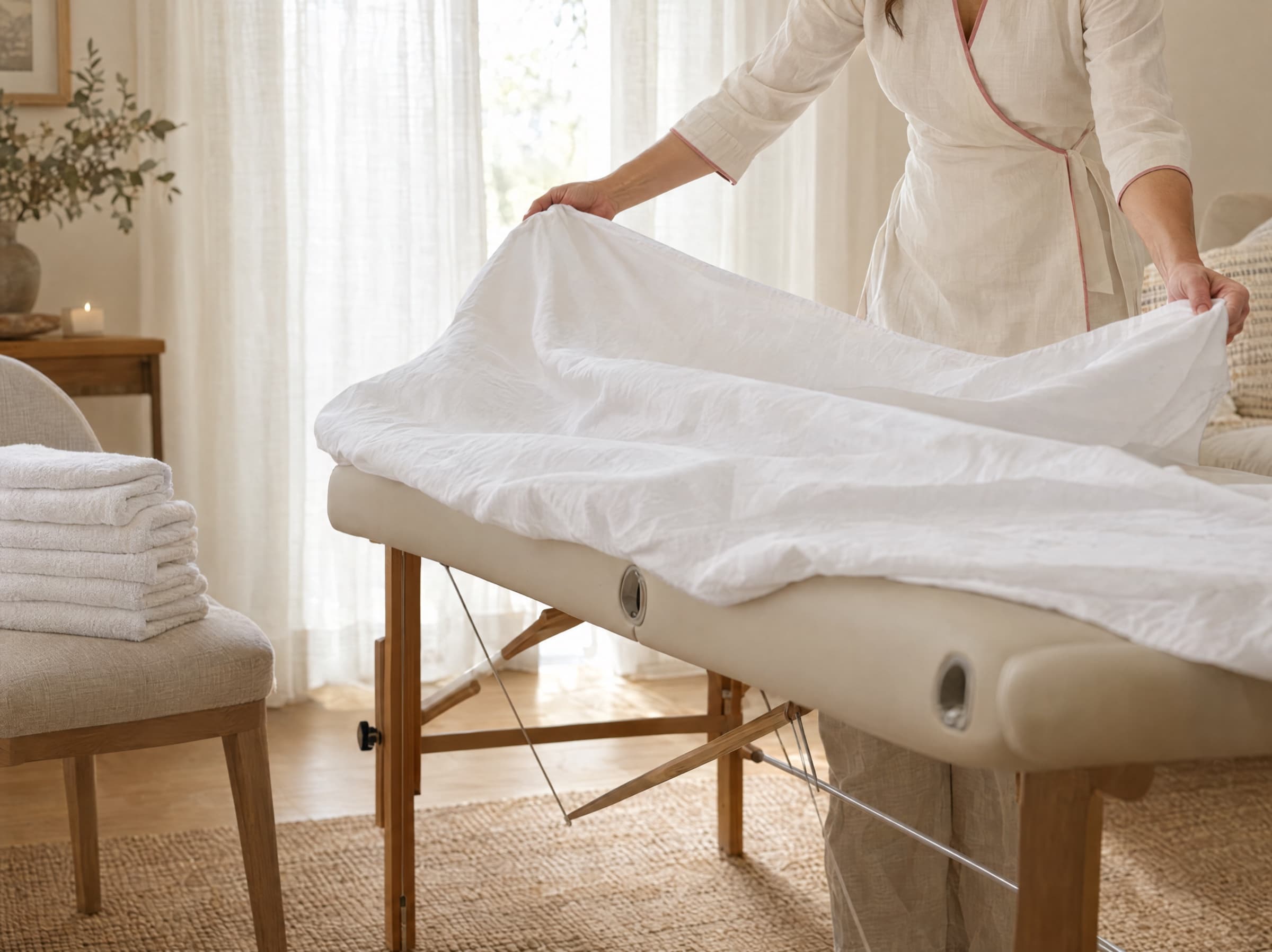
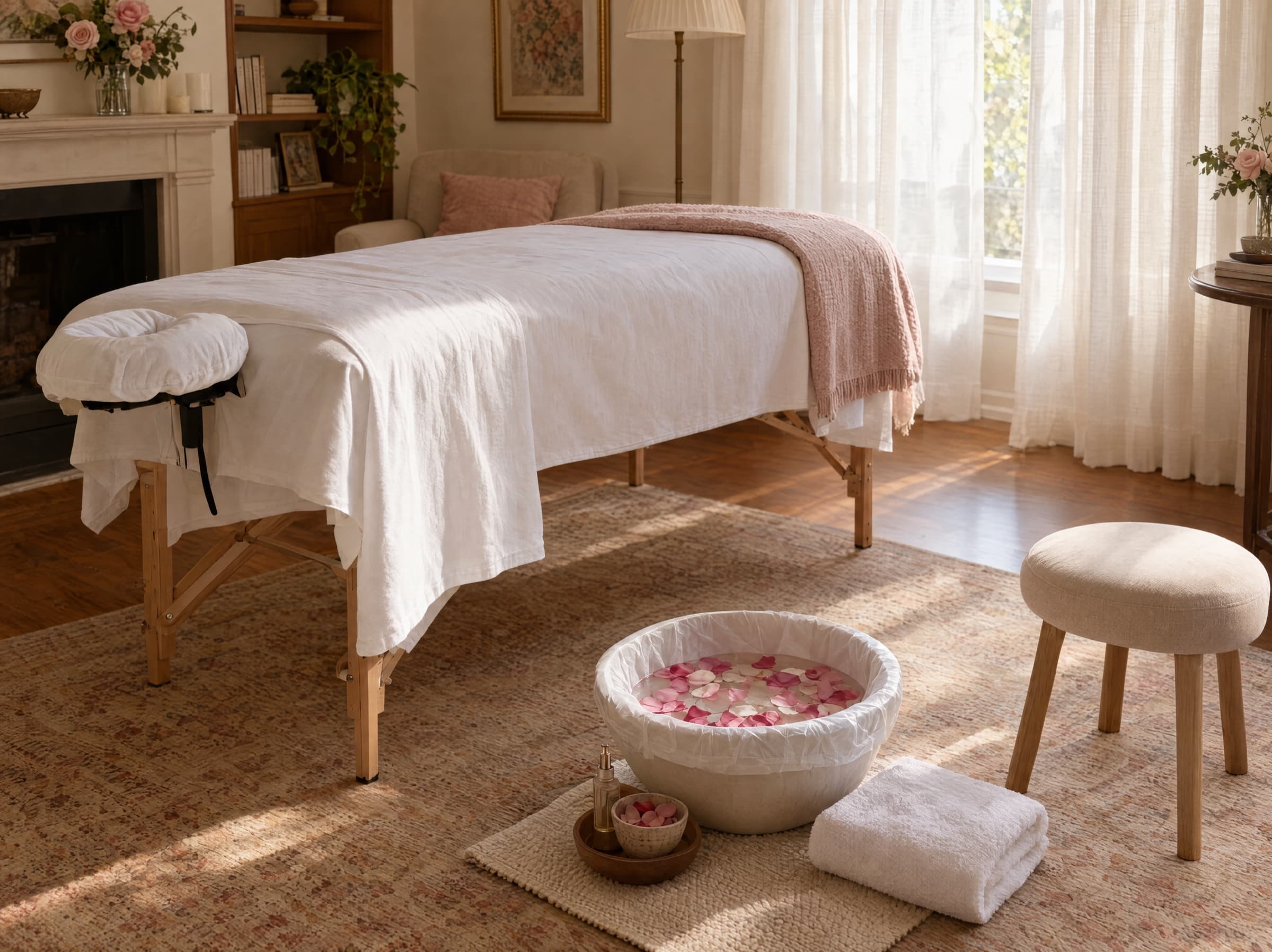
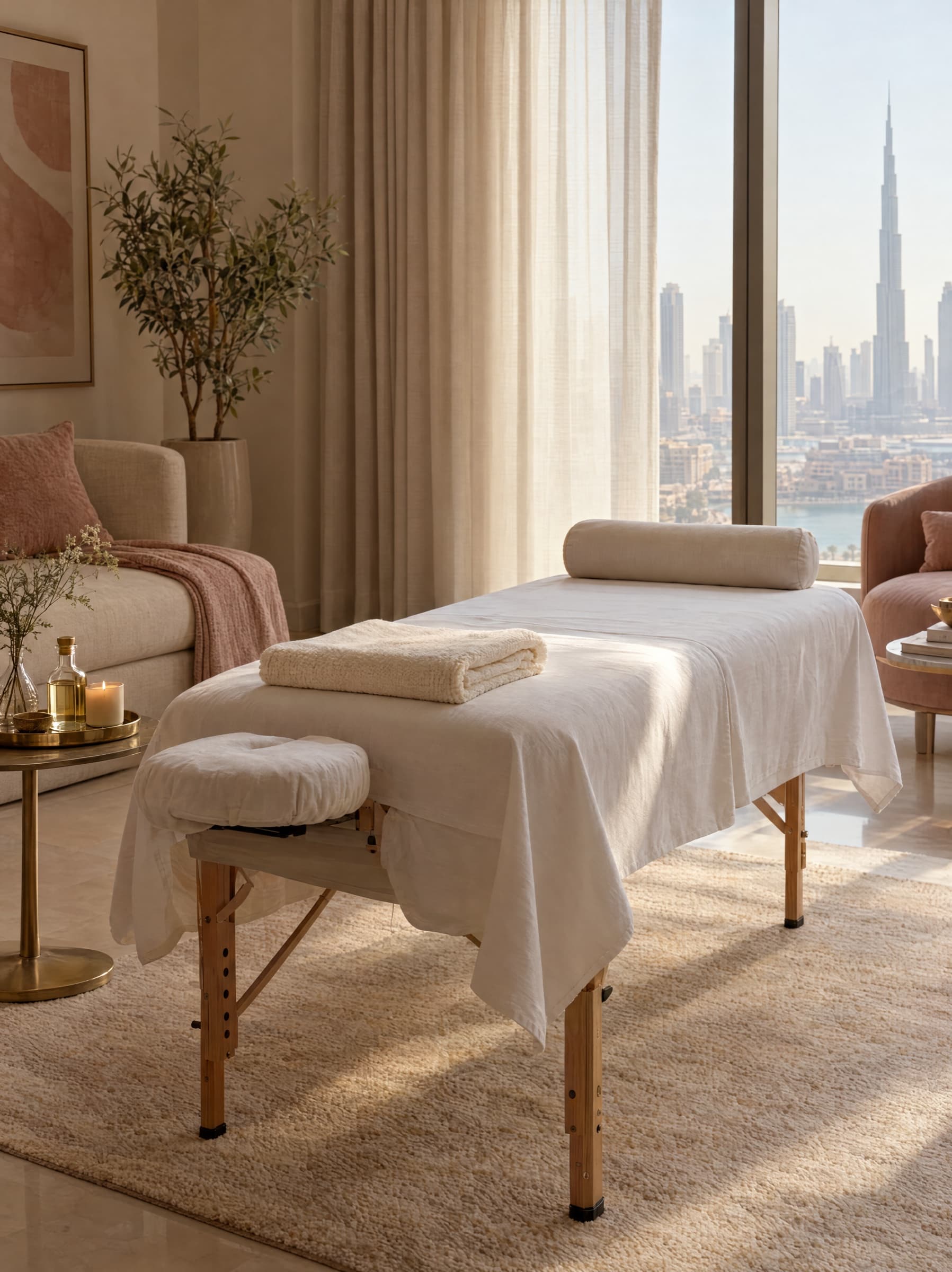
Whichever you book, the therapist arrives with her own table, fresh linen and a face cradle cover that is used for you only. She sets up wherever you have a clear space and good ventilation; a bedroom or a quiet corner of the living room both work. You choose how much of your body is worked on and you are draped throughout. Every therapist is a woman, and every client is a woman.
Nothing on our menu is a sports, hot stone or Thai massage, and there is no pregnancy massage. If you are pregnant, read massage during pregnancy: what to ask first before booking anything.
What you can book
Both massages are on the massage page. Book the relaxing massage for 60 minutes of light to medium pressure over the whole body, or the deep tissue massage for 90 minutes of firm work on the back, neck and shoulders. If you would like a pedicure after the relaxing massage, The Quiet Hour package pairs the two in one visit; it is listed with the packages.