Hair treatment at home for damaged hair: what it can do
Honest expectations for colour, heat and hard-water damage, what a conditioning treatment changes and what only a cut can, and a UAE routine between visits.
Hair
A hair treatment at home for damaged hair can make it softer, smoother, shinier and less likely to break, and it can do that from the first visit. What it cannot do is heal hair. Hair is not living tissue: a split end stays split and a snapped strand stays short until it is cut. The honest plan for damaged hair is three things at once: stop the cause, condition what is there, and cut what is past saving. Here is how to tell which of the three you need most, and what to do between visits in this climate.
First, name the damage
Different causes leave different marks, and the fix depends on the cause.
Colour and bleach. Hair that has been lightened feels rough and dry, tangles when wet, stretches and then snaps, and takes hours to dry. Lightening opens and weakens the strand; that weakness is permanent in the hair that was treated. Conditioning masks and protein help it behave and cut down further breakage, and growing it out with regular trims is the real cure.
Heat. Daily straightening or blow-drying on high leaves hair dull, with frizz at the surface and white dots along the length where the strand has snapped. Reducing the heat is the whole treatment here; masks make the hair look better while you do.
Sun, sea and pool. Summer in the UAE bleaches hair a little and dries it a lot. Chlorine and salt strip the natural oils, and hair that is in the sun daily fades and roughens at the ends.
Hard water. Tap water across the Emirates is hard, and mineral deposits build on the hair over weeks, leaving it dull, stiff and harder to lather. Colour also fades faster. A clarifying wash every few weeks and a shower filter help more than any mask.
Tension. Tight ponytails, buns and headscarf pins in the same spot every day thin the hair at the temples and hairline. If you see fine, short hairs and a receding edge, loosen the style before you treat anything.
What a treatment can and cannot do
A deep conditioning mask works on the outside of the strand. It smooths the cuticle so hair reflects light and slides rather than catching, and it deposits conditioning agents and, in protein masks, proteins that sit in the weak spots for a few washes. The result is real: softer, shinier hair that tangles less and breaks less when you brush it.
The result is also temporary. Every treatment washes out over a few washes, which is why the routine matters more than the visit. And no mask closes a split end; once a strand has split, the split travels upwards until it is cut off. A trim of even a centimetre every six to eight weeks does more for the ends than any product.
If you have been offered a "repair" that promises to rebuild or permanently fix hair, ask exactly what it is. Many of those are smoothing treatments, which are a different thing and are explained in keratin, protein and repair treatments compared.
How to do a hair treatment at home
Between visits, a weekly mask is the routine that keeps damaged hair moving in the right direction.
- Wash with a gentle shampoo and squeeze the water out; masks take better on towel-dried hair than on soaking hair.
- Apply the mask from the mid-lengths to the ends, where the damage is. Keep it off the scalp unless it is made for the scalp.
- Comb it through with a wide-toothed comb so every strand is coated.
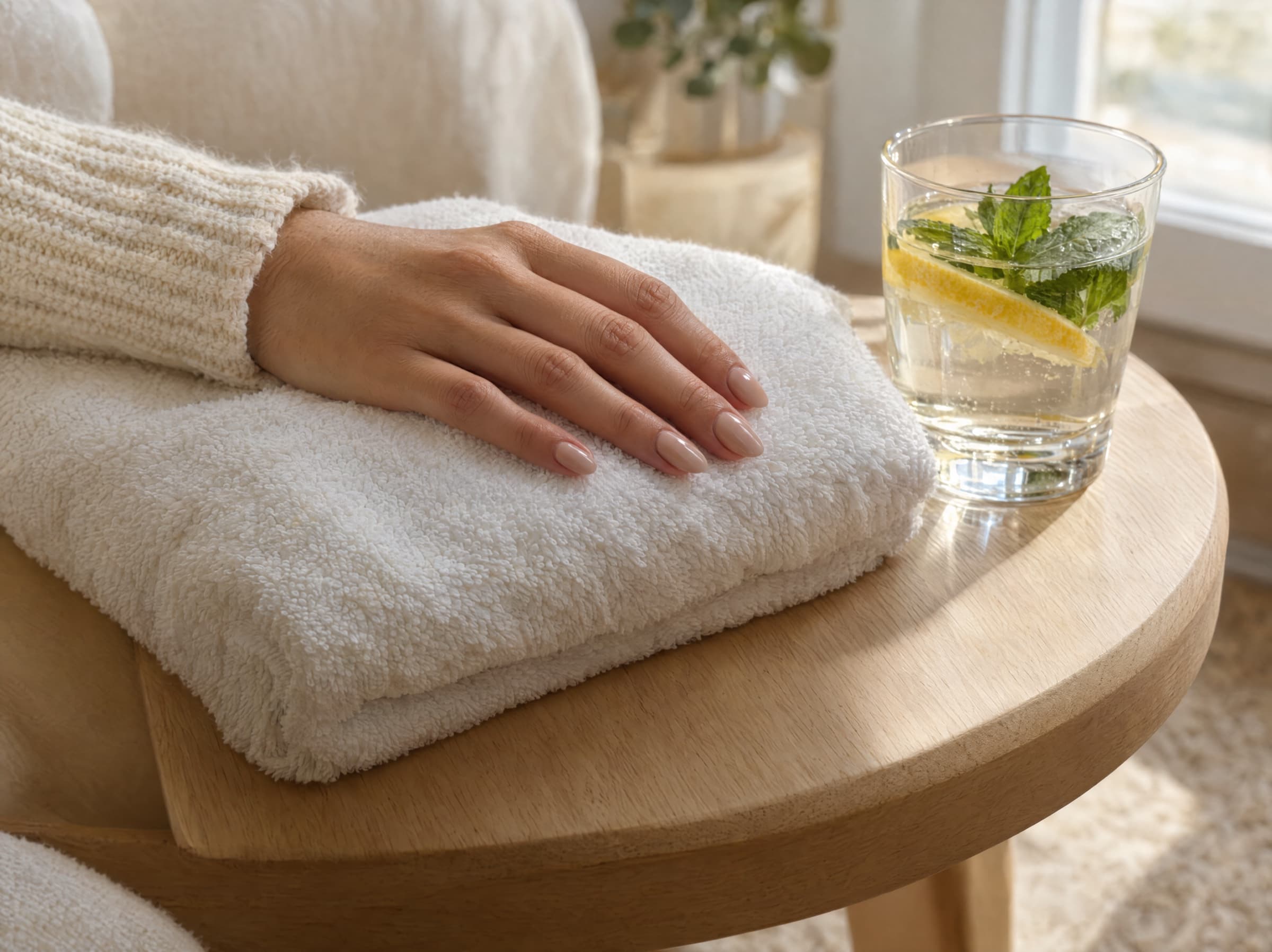
- Cover with a shower cap and a warm towel, or sit in a warm room, for ten to twenty minutes. Warmth helps the mask take; leaving it on for hours does not add much.
- Rinse with cool water to close the cuticle.
- Dry gently: squeeze with a towel, use heat protection, and dry on medium rather than high.
Alternate a moisturising mask with a protein mask if your hair is bleached or feels mushy when wet. If hair feels stiff or straw-like after a protein mask, you have used too much protein; go back to moisture.
How to take care of hair in the UAE
- Cover it in the sun. A scarf or a hat between eleven and four in summer does more than any spray.
- Wet and condition before you swim. Hair that is already full of clean water and conditioner takes in less chlorine or salt. Rinse as soon as you get out.
- Wash with a gentle shampoo, and clarify every few weeks to lift the mineral film from hard water. A filter on the shower head is worth the small cost.
- Condition every wash, ends first.
- Use heat less, and lower. Air-dry to nearly dry before the dryer; keep the straightener to the lowest setting that works; never iron damp hair.
- Sleep on silk or satin, and loosen the ponytail.
- Trim every six to eight weeks while you grow damage out.
- Mask weekly, and have a deeper treatment every few weeks until the hair feels itself again.
What you can book
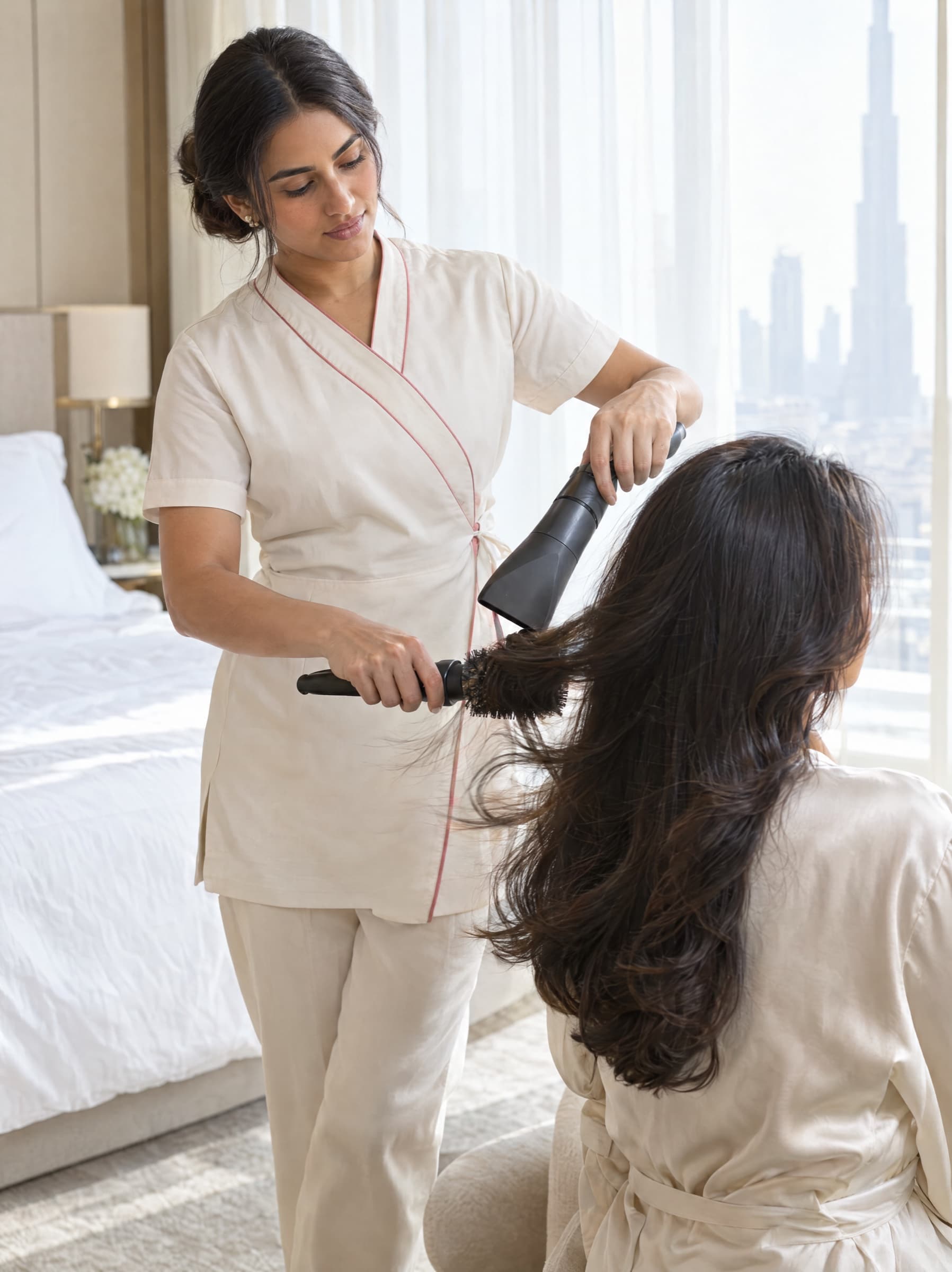
The repair treatment at Hamd Beauty is a deep conditioning mask with a scalp massage and a blow-dry, 90 minutes at home, with a fresh cape liner and neck strip for every client. It is on the hair menu alongside the blow-dry. We do not cut or colour hair; for the trim that damaged ends need, book your hairdresser, and let us keep the lengths conditioned between cuts.