Is henna safe during pregnancy, and what is black henna?
Is henna safe during pregnancy, for children and for sensitive skin: natural henna versus black henna, how to do a patch test, and when to ask your doctor.
Henna
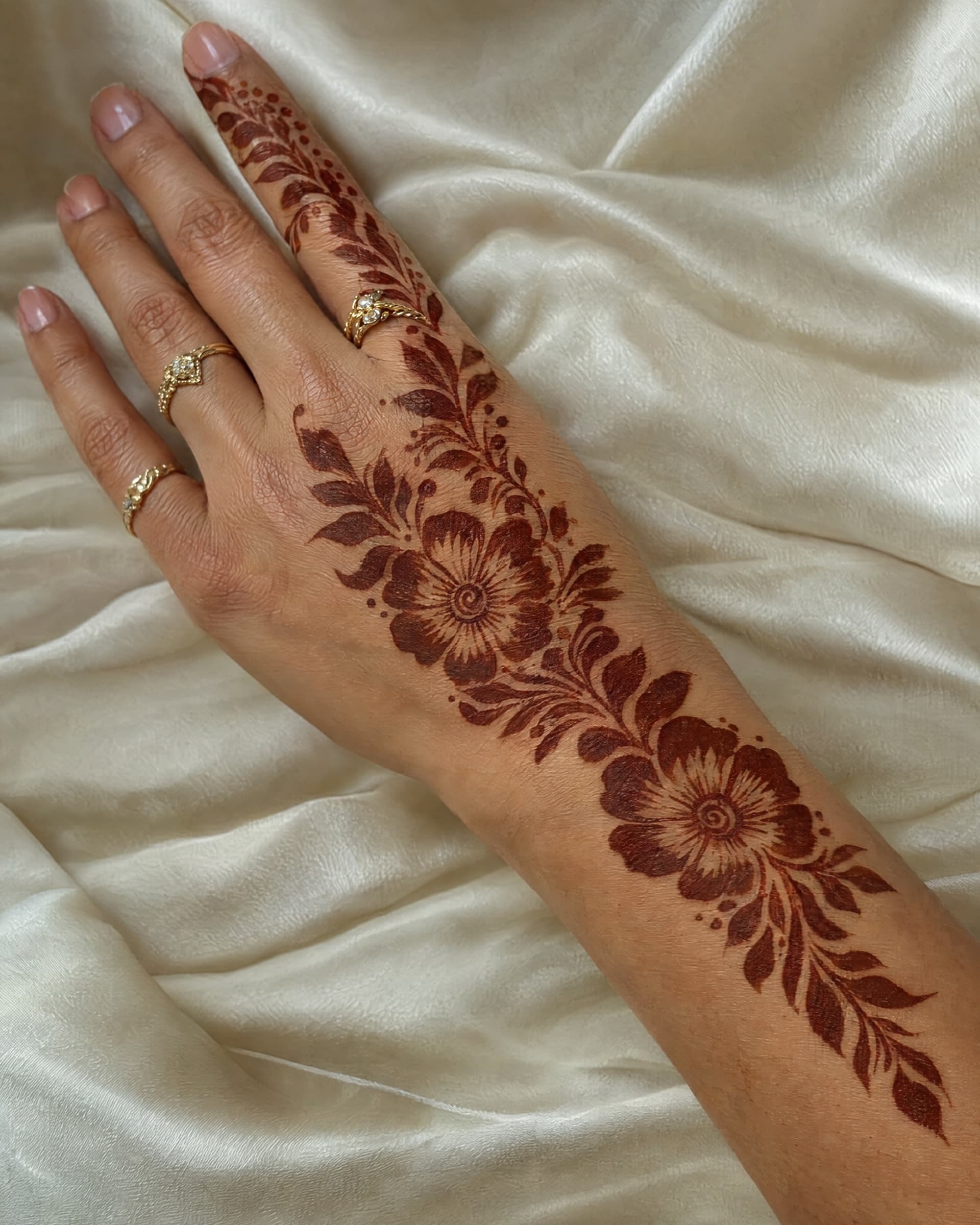
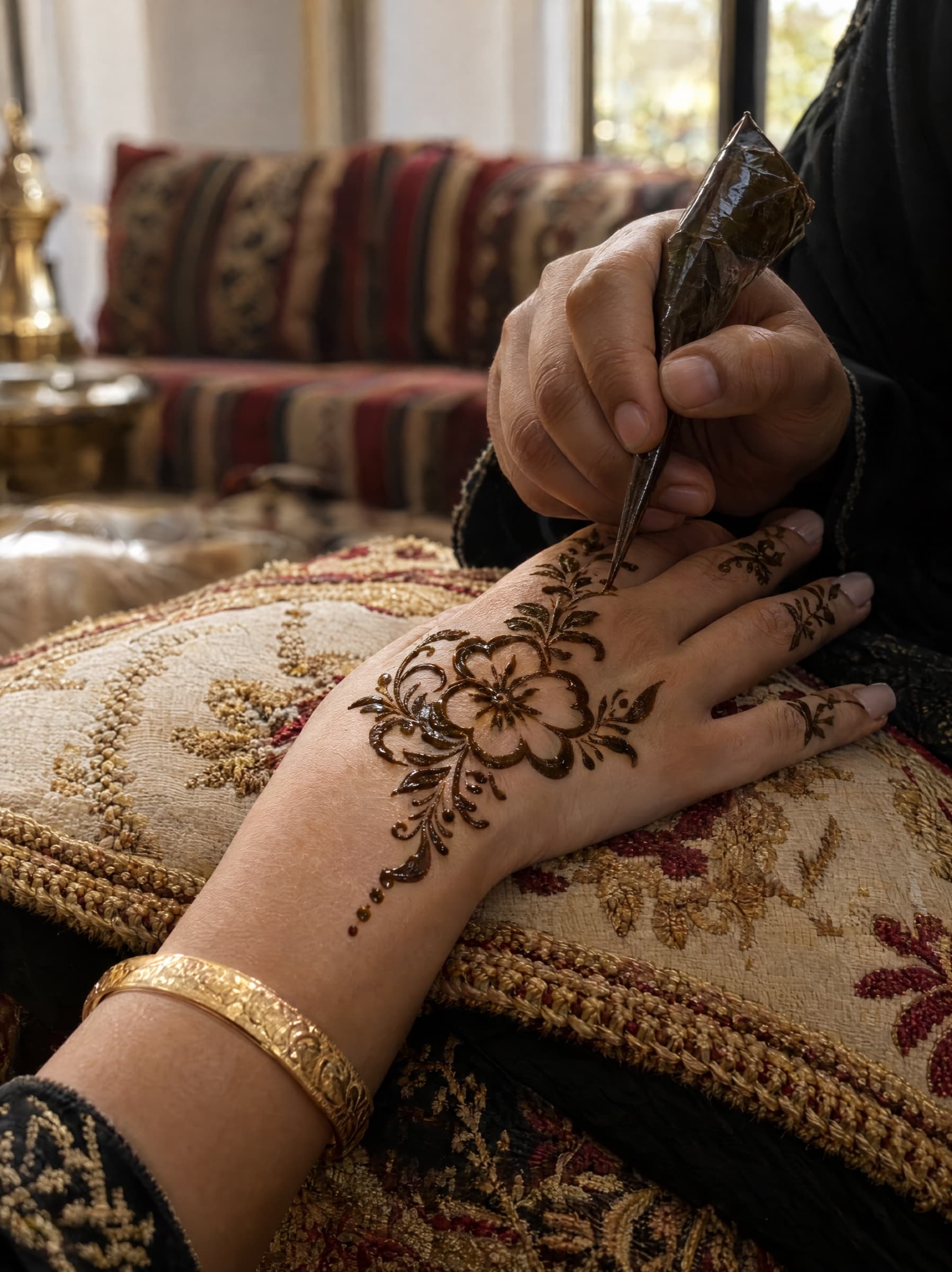
Natural henna is a plant dye that sits in the outer layer of the skin, and many women wear it through pregnancy for Eid, weddings and gatherings. Whether it is right for you is still a question for your doctor, particularly in the first months, and the more important warning applies to everyone: "black henna" is not henna, and it can burn the skin and cause a permanent allergy. This article separates the two and explains the patch test.
All of this is general information, not medical advice.
Is henna safe during pregnancy?
We could not find a health authority's page that answers this question directly, so we will not pretend to. What can be said in general terms is this: natural henna is made from a crushed leaf, it stains the surface of the skin rather than being absorbed into the body in any meaningful amount, and it has been used on pregnant women across the region for generations. Most concerns you will read about are really about black henna, a different thing entirely.
So: ask your doctor, tell her exactly what is planned (natural paste, on the hands, for a few hours), and ask her especially if you are in the first trimester, if you have had any skin reaction in the past, or if your pregnancy has had complications. If she would rather you waited, wait; henna will still be there after the baby.
Two practical points if you do go ahead while pregnant:
- Ask what is in the paste. Some pastes include essential oils to deepen the colour, and you may prefer a plain one. You can ask us before you book.
- Do a patch test, described below, even if you have had henna many times before. Skin can behave differently in pregnancy.
What is black henna?
Black henna is a paste sold as henna, usually at holiday stalls, beach kiosks and markets, that gives a black stain in an hour or less. Natural henna cannot do that: it stains orange to red-brown and takes hours. To get black, fast, the paste is made with a chemical dye, most often the same one used in dark hair dyes, in a far higher concentration than any hair product would allow on the skin.
The results reported around the world are the same: burning and blistering in the shape of the design within days, scarring that can last for years, and, most seriously, a lifelong sensitisation to that dye. A woman who has reacted to black henna once may react badly for the rest of her life to hair dye and other products containing the same chemical. We are not able to link a regulator's page here, but this is widely documented and is why the phrase black henna should stop you in your tracks.
How to recognise it:
- The stain is black, or the stall promises black.
- The paste is black or dark grey rather than green-brown.
- It "develops" in under an hour and needs no waiting.
- There is a chemical smell rather than an earthy, herbal one.
- Nobody can tell you what is in it.
Natural henna is none of those things. If in doubt, walk away.
Is henna safe for kids?
Natural henna on a small design is usually fine on a child with healthy, unbroken skin, and it is a normal part of Eid for many families. Sensible precautions: a patch test first, a smaller and simpler design, a shorter time with the paste on, and no henna on a child who is unwell, has eczema or a rash, or has ever reacted to a hair dye or temporary tattoo. This is general information; a paediatrician is the right person for a child with any skin or health condition.
The real risk to children is black henna, because they are the ones who ask for the dragon at the beach stall. A sensitisation acquired at eight is carried for life. If a child has had a "temporary tattoo" on holiday that blistered, tell her doctor and keep a note of it for when she is older and wants to colour her hair.
What is jagua henna?
Jagua is a dye made from a South American fruit. It stains the skin a blue-black colour, which is why it is sometimes sold as a safe alternative to black henna, and sometimes mixed with henna to darken the result. It is not henna, and it is not the chemical black henna described above. It can still cause allergic reactions in some people, so it needs a patch test exactly as anything applied to the skin does. If you are offered jagua anywhere, ask what is in it and test it first.
How to do a henna patch test
A patch test is the simplest safety step there is, and it is worth doing before your first booking with any provider, before a bridal design, in pregnancy, and for a child.
- Ask for a small dot of the actual paste on the inner forearm or behind the ear.
- Leave it on as long as you would a design, then scrape it off without water.
- Wait 48 hours. A red-brown stain is expected. Itching, redness beyond the stain, swelling, bumps or blistering are not.
- If anything reacts, do not go ahead, and tell the provider what happened.
When to ask a doctor
- You are pregnant, especially in the first trimester
- You have eczema, psoriasis or any active skin condition on the area
- You have a known allergy to hair dye or have ever reacted to a temporary tattoo
- You have a condition affecting red blood cells, or have been told to avoid henna in the past
- A design has reacted: burning, blistering, swelling or spreading redness. Wash it off and see a doctor the same day.
What we do and what to ask us
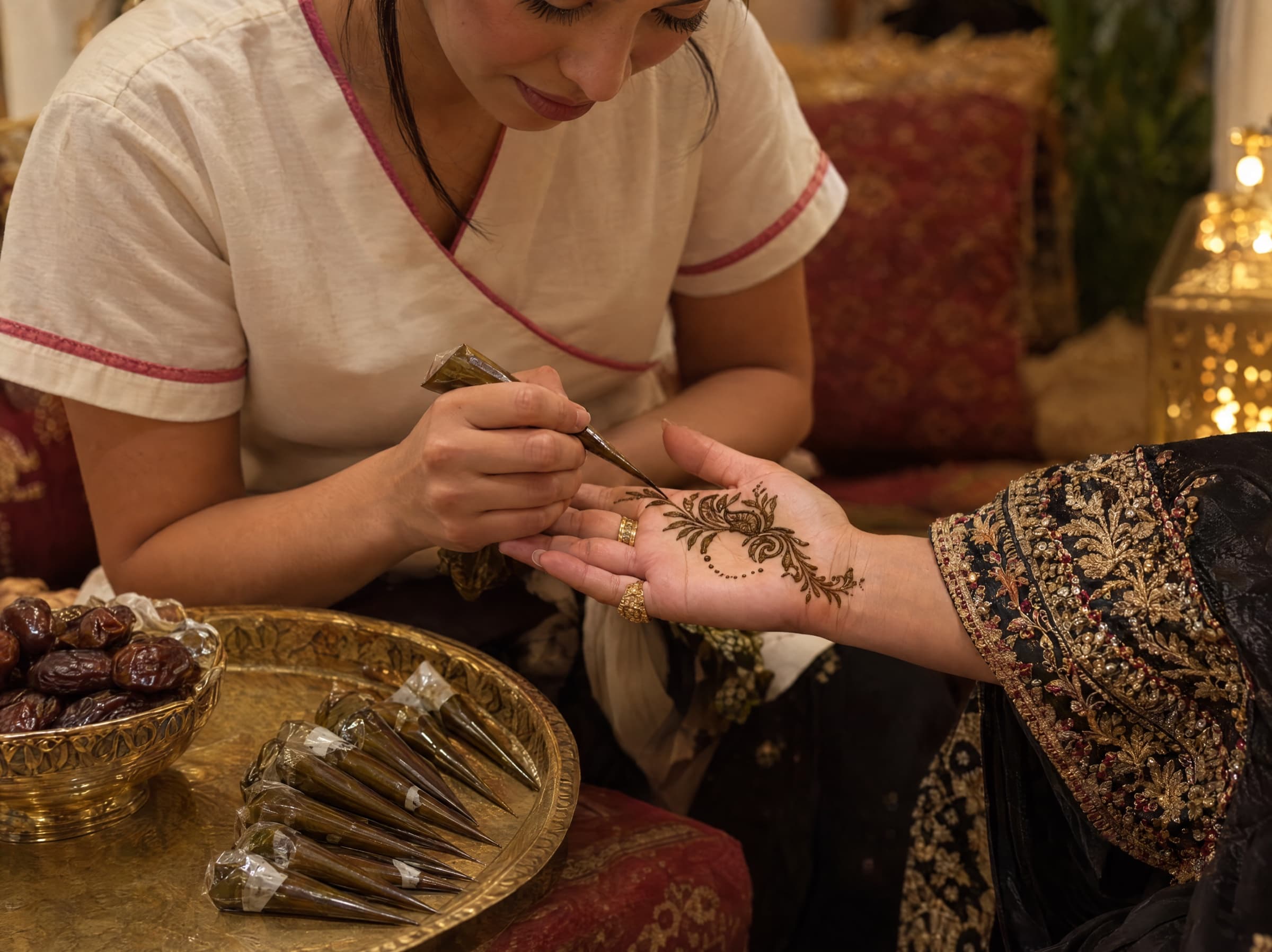
Hamd Beauty applies henna at home, in Khaleeji and floral designs, for Eid, weddings and gatherings. Before you book, you can ask what is in the paste, ask for a patch test, and tell us in the booking notes about any allergy, skin condition or pregnancy so the therapist knows before she opens the cone. She can advise you not to go ahead, and she will.
What you can book
Henna on both hands and bridal henna are on the henna page. If you have questions about how the stain behaves rather than whether it is safe, how long henna lasts on the hands and how to get a darker henna stain cover them.